
How to Search Civil Dockets
Indiana MyCase hosts the online Morgan County civil docket search. Pick Morgan County as the court. Choose Civil, Family, or Probate as the case group. A full Rule 8 case number works best as a key. For a person, type the last name and add a first name, filing dates, status, or case type to narrow things down. Searching a business? Use the Business field, not the person-name fields.
No account is needed for public access. The portal caps results at 1,000, so trim any broad name before you run it. If MyCase returns nothing, check the spelling, try the sounds-like option, drop a strict birth date, and make sure the filing belongs to a county court. Older or restricted records may need help from the clerk.
- Choose the Case or Name tab and the correct Morgan court.
- Enter the full identifier or a focused name.
- Limit the query to Civil, Family, or Probate and add dates or status.
- Open the result and verify case style, number, court, type, filed date, and status.
- Read the CCS in order and obtain the controlling order from the clerk when needed.
Prefer offline routes? Call the Morgan County Clerk's general line at 765-205-1548 or the Records Office at 765-205-1601. You can also visit the Justice Campus counter in person, or send the Records Office copy form by mail or email.
Morgan Superior 3 Civil Route
Small claims and evictions land first in Morgan Superior Court 3 under the local allocation. The official Superior Court 3 page describes that division and its civil docket role.
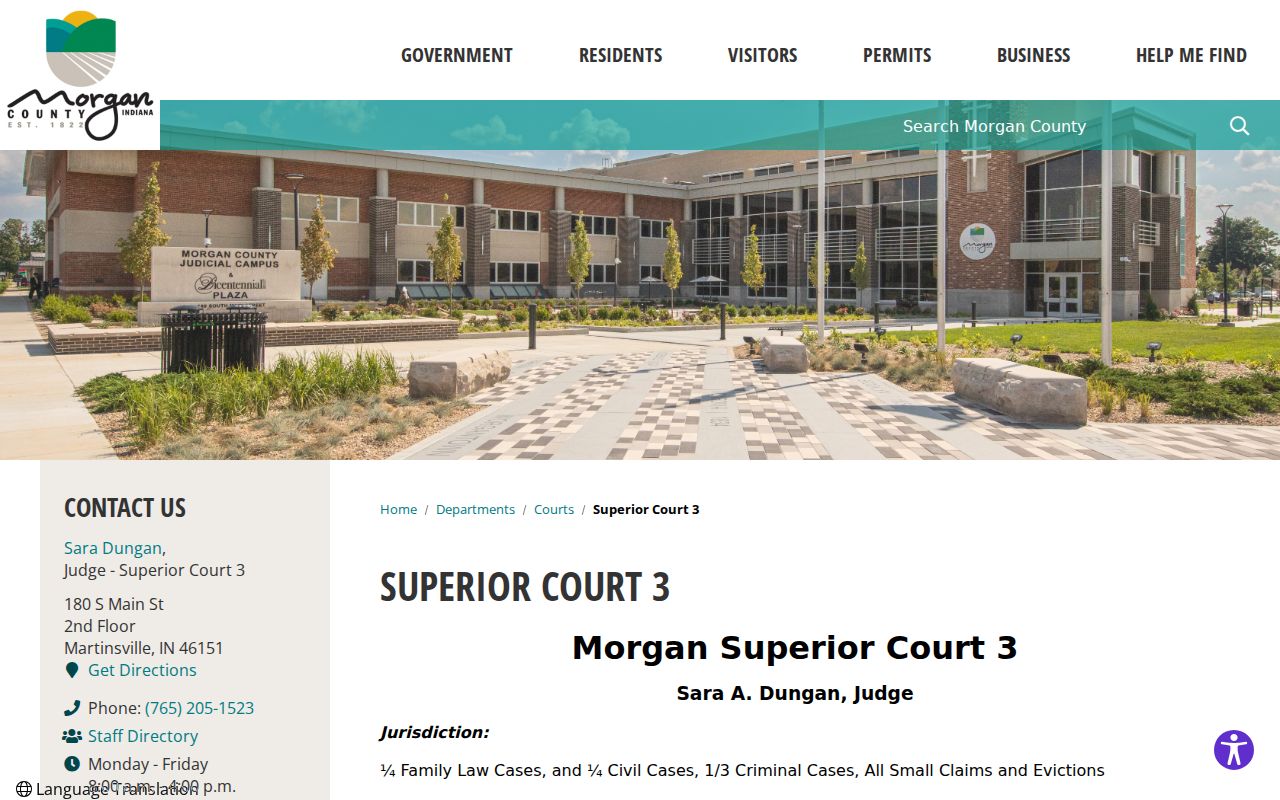
Look for SC on a small claim and EV on an eviction. Morgan's official small-claim material sets a $10,000 ceiling plus costs. Current Notice of Claim and eviction forms live in the clerk document center. Certified providers handle e-filing around the clock. That channel covers filing, though, not public docket search.
A return date can shift after service, a continuance, or amended damages. For any future court date, read the newest CCS event first. If the entry is unclear, call Superior Court 3 at 765-205-1523. The court sits on the second floor of the Justice Campus.
What a Civil Docket Shows
The header on a Morgan County civil docket names the case, court, classification, filed date, status, and related references. Parties may appear as plaintiff, defendant, petitioner, respondent, estate representative, or protected participant. From there the CCS logs service, answers, motions, discovery, mediation, hearings, judgments, appeals, and payment events.
| Case number | Morgan court code, filing year and month, civil type, and sequence. |
|---|---|
| Party and role | Public name or protected label and the person’s place in the action. |
| Event | Dated filing, service, hearing, order, judgment, or payment entry. |
| Setting | Date, session, reason, officer, result, and possible cancellation. |
| Document icon | A remotely available public copy; an absent icon does not prove no filing exists. |
| Status | Open or closed case-management label, not a full statement of all obligations. |
A filed motion is a request, not a ruling. Look for the later order or event result before assuming anything. A "closed" label can also sit beside an open judgment-payment, copy, transcript, or appeal question.
Morgan Civil Case Codes
Indiana Administrative Rule 8 sets out the codes that narrow a Morgan County civil docket search. Each code names the filing class only. It says nothing about who prevailed.
- CC
- Civil collection.
- CT and PL
- Civil tort and civil plenary, which is a general civil action not assigned another code.
- DC, DN, DR
- Domestic relations with children, without children, and an older domestic-relations classification.
- ES, EU, EM
- Supervised estate, unsupervised estate, and estate miscellaneous.
- MF
- Mortgage foreclosure.
- PO
- Protection order.
More codes worth knowing: AD for adoption, GU or GM for guardianship, MH for mental health, MI for miscellaneous civil, TP for a verified tax-deed petition, and XP for an expungement petition. Some categories are confidential or partly restricted.
Types of Civil Cases on the Docket
Morgan Superior Courts 1, 2, and 3 split the civil and family work. Superior 1 and Superior 2 share probate, estate, adoption, guardianship, and trust matters. Small claims and evictions go to Superior 3 first. Circuit Court holds juvenile matters. Protective orders rotate quarterly among Superior 3, Superior 2, Superior 1, and Circuit, unless a related case already exists.
| Matter | Common code | Morgan route |
|---|---|---|
| Collection | CC | Superior civil docket |
| Small claim | SC | Initially Superior 3 |
| Eviction | EV | Initially Superior 3 |
| Estate or probate | ES, EU, EM | Superior 1 or 2 allocation |
| Family | DC, DN, DR | Superior civil/family allocation |
| Juvenile | JC, JD, JS, JT, JP | Circuit Court |
Trust the court code, not geography. A party's home town does not fix venue. A transfer or a related case can change the expected assignment.
Morgan Civil Court Offices
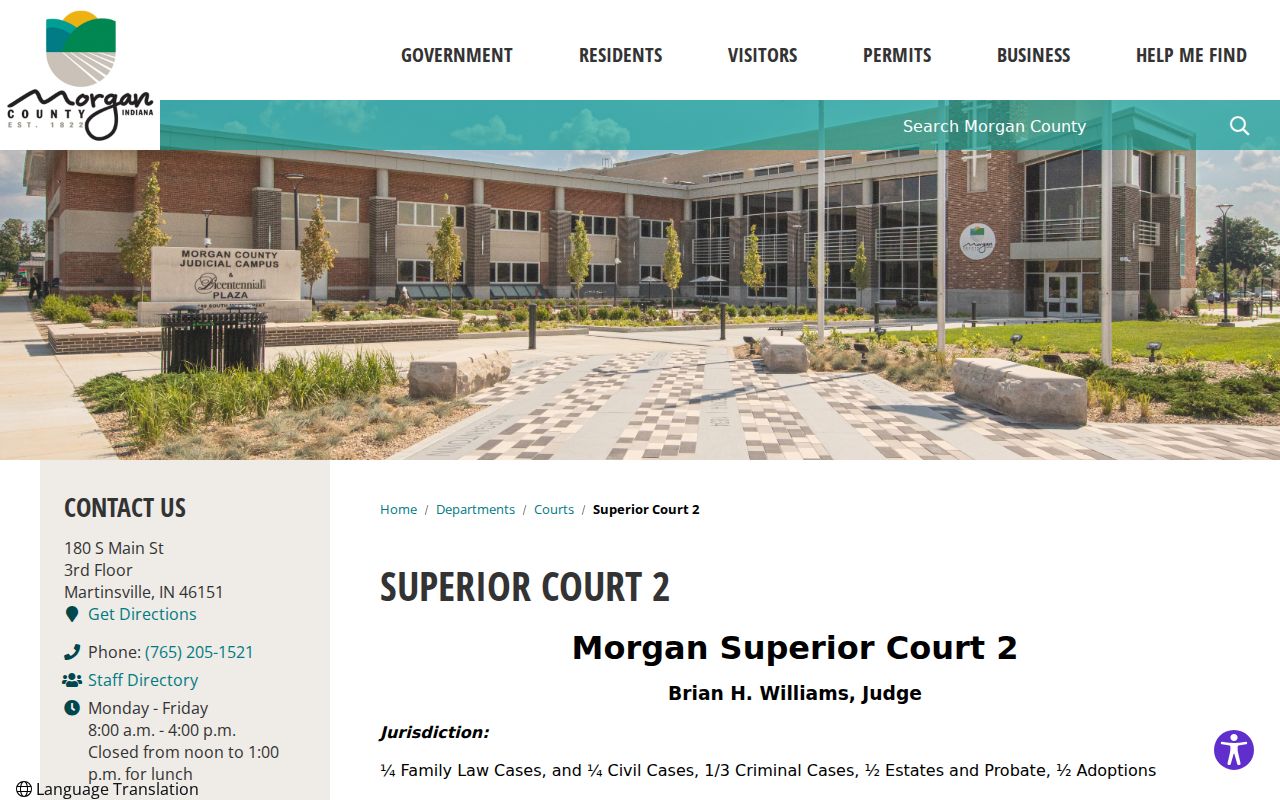
The county's Superior Court 2 page covers one of the courts handling civil, family, and probate dockets.
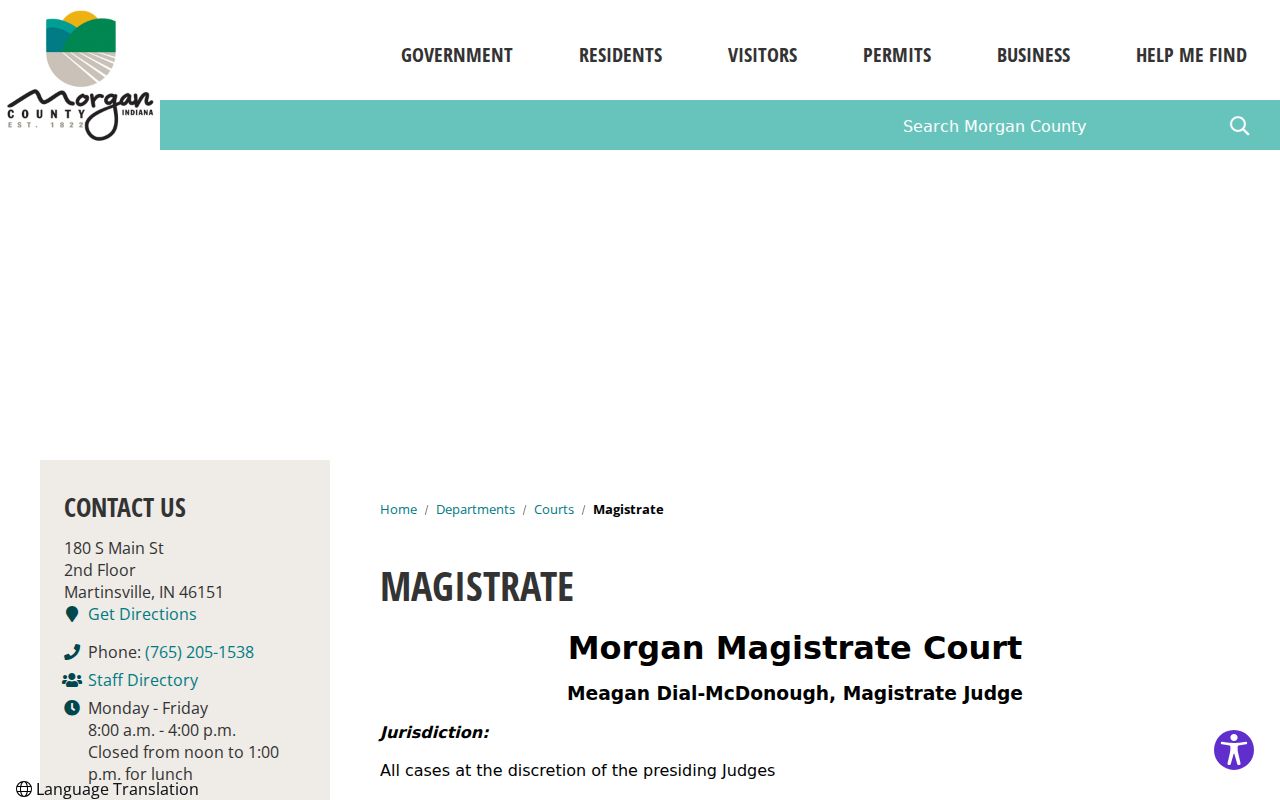
The Morgan Magistrate also handles duties that the judges assign, and its official county page lists the division's services.
The CCS names the court and judicial officer behind each setting. Court pages help with current phone numbers and floor details. For routing a specific case, though, the docket itself remains the best source.
Morgan County Records Office
Suite 172, 180 S. Main Street
Martinsville, IN 46151
765-205-1601
records@morgancounty.in.gov
Settings and Hearings on Civil Dockets
Civil settings come in many forms. Return dates, status conferences, motion hearings, mediation. A setting is not always the final trial date, though bench trials and jury trials appear on the same schedule. Open the event detail and note the date, session, reason, comment, result, and courtroom or location whenever the docket supplies them. Then scan forward. A reset, continuance, amended setting, or cancellation may change what that date means.
Morgan local rules generally demand a written, verified, served continuance motion filed promptly after the reason surfaces. The rules set seven-day timing for nonjury settings. Jury settings get fourteen-day timing, subject to exceptions. Filing the motion alone moves nothing; only the court's order or an updated setting changes the date. For a small claim or an eviction, service can shift the return date. Confirm the newest entry with the assigned court. The Morgan County court calendar resource explains date confirmation across the county courts.
A canceled event stays in the chronology. So trace the docket to the newest future setting, or call the assigned court for the current status.
Morgan Civil Filing Volume
Morgan County clerks opened 1,555 new collection cases in 2024. That count comes from the official ICOR aggregate. Evictions added 377 and small claims 304. Protective orders reached 302. Domestic-relations filings split into 167 cases without children and 146 with children. Rounding out the civil docket were 115 mortgage foreclosures, 81 plenary cases, and 76 tort cases. Numbers this lopsided explain a docket-search lesson. Filtering by court and case type saves real time.
Probate filings added more volume. The countywide counts included 108 unsupervised estates, 64 miscellaneous estates, 13 supervised estates, 69 guardianships, and 50 adoptions. These figures cannot reveal the status, facts, or outcome of any single Morgan County civil docket.
Public Access to Civil Dockets
Indiana Access Rule 4 treats court records as public unless an exclusion applies. Rule 5 then shields mental-health cases and confidential filings. It also covers privileged matter and protected personal information. Anything sealed by law or by order stays closed too. Special limits also attach to family, juvenile, adoption, guardianship, protection-order, and expungement records.
Treat an online document link as convenience only. MyCase itself says its display is not the official court record. Older filings may never appear online. The Morgan County Clerk can tell you whether an unlinked public document sits in the official file. When you need a judgment, decree, complaint, or summons, send the county copy form in person. Mail and email work too. Never email card details; submit the form, then call the records office.
For excluded material that qualifies, the extraordinary-access rule sets up a verified written request process. The rule page spells out each step a requester must follow.
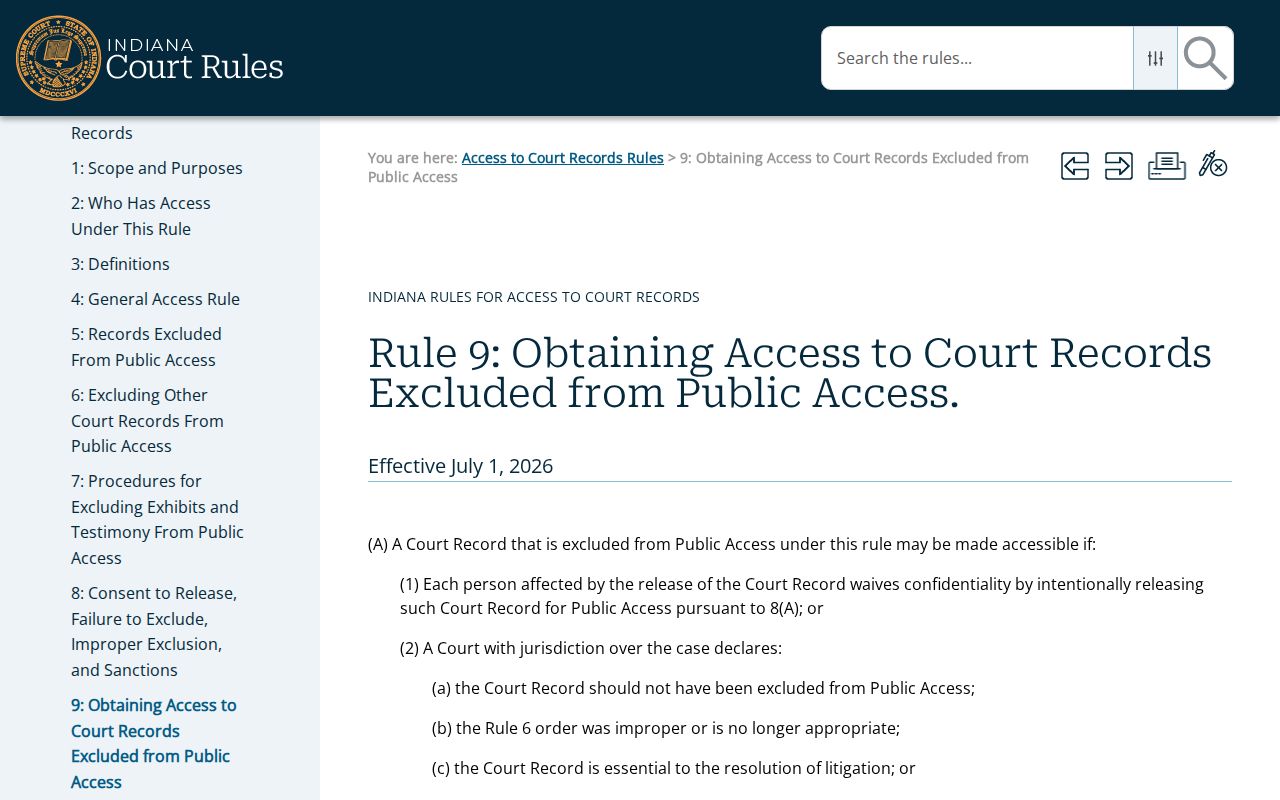
Under that process, the court may require notice, accept responses, hold a public hearing, and issue a written order. Until the request is decided, the excluded record remains confidential.
Morgan Civil CCS or Judgment
A free CCS entry is only an index of the civil case. A certified judgment, by contrast, is an authenticated court document. The CCS can help you find the filing and event date. Yet it may shorten the ruling, and it never substitutes for the signed decree or order. When full terms matter, ask the clerk for the exact paper.
The county form asks for the case number, an approximate filing date, and the names on the case. It also wants the document requested, copy count, certification choice, delivery method, and your contact details. Mail requests go to Morgan County Clerk's Office, ATTN Records Dept, 180 S. Main St., Suite 172, Martinsville, IN 46151. A check or money order may accompany a mailed form; do not send cash.
Email requests go to records@morgancounty.in.gov. Pickup can be arranged by calling 765-205-1601. An emailed certified document carries electronic certification and no raised seal. Confirm that format suits your intended use before you order.