
How to Get Court Records
Start with Indiana MyCase. A case number works best, but a careful name search can find the docket too. Write down the court, the case number, the event date, and the exact title of any document you want. MyCase is a convenient display. Yet the site itself warns it is not the official court record, and some older filings never made it online at all.
No public link? Go straight to the Morgan County Records Office. Call 765-205-1601, email records@morgancounty.in.gov, or visit Suite 172 at 180 S. Main Street, Martinsville, Indiana 46151. The general clerk line is 765-205-1548. At the counter, having the case number, filing date, caption, and document name ready makes the lookup move fast.
- Locate the case and identify the exact event or document.
- Download an available public copy or complete the current copy form.
- Choose mail, email, or arranged pickup and state the number of copies.
- Select plain, certified, exemplified, or triple-seal authentication.
- Mail payment by check or money order, or call with card details after emailing the form.
- Contact the court reporter separately for a transcript.
Never email card information, and never mail cash. The court offers no fax line, drop box, or public subscription service for court records.
Morgan Records Department Route
What does the clerk actually keep? The Morgan County Clerk duties page answers that directly, listing pleadings, evidence, rulings, judgments, orders, decrees, transcripts, costs, fines, and money judgments among the filings the clerk maintains.
The Records Department takes over from there on copies. Email can deliver a public or electronically certified file, while mail or pickup may suit a request that needs a physical seal. Call ahead to confirm the page count and the current cost. Security screening applies at the Justice Campus entrance.
Morgan County Records Office
Suite 172, 180 S. Main Street
Martinsville, IN 46151
765-205-1601
records@morgancounty.in.gov
Types of Court Records
The CCS is just an index of case events. Behind it sits the actual Morgan County court file, which can hold pleadings, summonses, returns of service, motions, briefs, exhibits, orders, judgments, decrees, plea agreements, sentencing orders, financial records, and transcripts. A public online record will not always show every one of those documents.
| Record | What it does | Best source |
|---|---|---|
| CCS | Lists events in date order | MyCase or clerk |
| Pleading or motion | States a party’s filed request | Public link or clerk file |
| Order or judgment | States the court’s ruling | Signed or certified clerk copy |
| Transcript | Records spoken proceedings | Court reporter |
| Financial record | Shows charges and payments | Portal lead, clerk confirmation |
A motion entry in the docket only means someone filed a request. It does not mean the court granted it. So look for the later order. Any balance shown online can also miss later interest or transactions. Confirm the current amount with the clerk. Rely on that figure alone.
Morgan Document Center Forms
The county Clerk document center sorts forms by title, type, department, category, topic, year, and date.
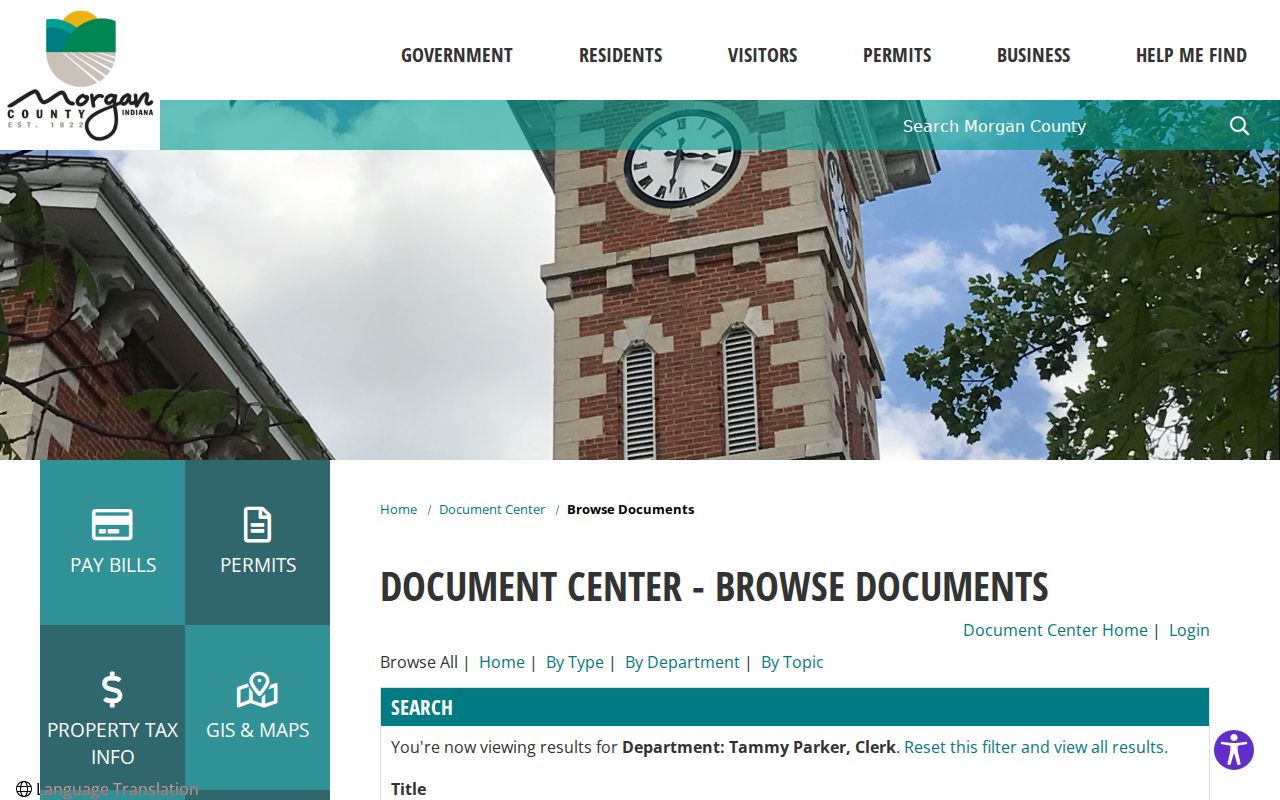
The Request for Court Copies form now carries revision NFE 082025. It wants your contact details, how you want delivery, an approximate filing date, the case number, and the names on the case. You also list the exact documents, how many copies, whether certification is needed, your payment method, and the amount enclosed. Sample items include a divorce decree, a judgment, arresting information, a sentencing order, and a plea agreement.
A precise request saves a follow-up call. Pull the document title straight from the CCS. Add its event date. Ask the clerk's staff to confirm the page count before you pay.
What a Court Record Contains
Pull up a Morgan County court record and you get three layers: the header facts, the chronological register of entries, and the documents filed in the case. What you can see depends on the case and the item. One file may hold open court orders right alongside protected personal information.
| Case header | Style, number, court, type, filed date, status, and references. |
|---|---|
| Parties | Public roles and names or protected descriptions. |
| CCS events | Filings, settings, orders, results, and document references. |
| Documents | Pleadings, notices, returns, motions, orders, and judgments. |
| Financials | Charges, credits, payments, and displayed balance. |
| Certification | Clerk authentication attached to a requested copy. |
Do not treat the public file and the official file as the same thing. MyCase is a public reference. The official record is the file the Morgan County clerk holds, and a certified copy shows the clerk authenticated the document you received.
Morgan Online Document Limits
The official MyCase document-access page explains remote and in-person access.
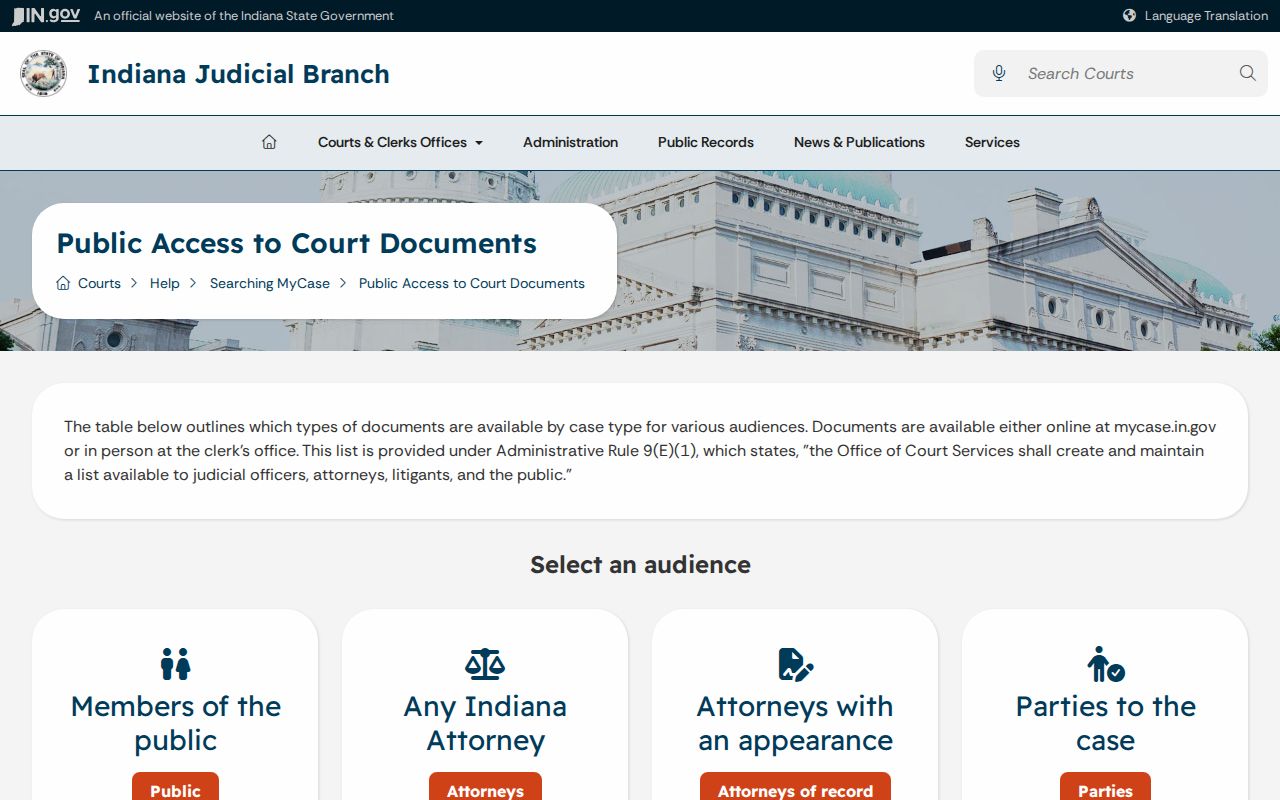
Just because a PDF is missing does not mean the paper was never filed. Write down the event description and its date. Then ask the clerk whether the item is public and can be copied. Who you are matters here. Public users, parties holding access codes, and attorneys of record each see different document sets.
MyCase displays case information, but it is not e-filing. Indiana's certified e-filing providers transmit filings to the court. From there, the clerk processes them and maintains the record.
Certified Copies and Fees
Morgan's current fee form lists separate charges for copying, certification, special seals, postage, and card service. Check the form again before you order anything, since it carries a revision date.
| Item | Published amount or condition |
|---|---|
| Plain copy | $1.00 per page |
| Certified copy | $3.00 certification plus $1.00 per page |
| Exemplified or double seal | $8.00 |
| Triple seal | $11.00 |
| Postage | $1.30 up to 5 pages; $3.25 for 6–20; $5.00 for 21–50; $11.50 over 50 |
| Card service | $1.50; never email card data |
Three levels of certification exist. An emailed certified document is electronic and carries no raised seal. An exemplified copy adds authentication from both the judge and the clerk. A triple seal layers on yet another clerk certification. Check with the receiving office before you pay, since buying the most expensive option by default can waste money on a form nobody asked for.
Morgan Clerk or Court Reporter
The clerk and the court reporter hold different pieces of the same Morgan County case. The clerk certifies documents that were filed. The court reporter, by contrast, prepares a transcript of what was said out loud. So a CCS entry showing that a hearing occurred is not a transcript. The clerk's per-page copy fee never covers reporter preparation.
Pin down the reporter using your assigned court and hearing date. Ask about preparation time and format. Ask about any deposit and the total charge. For the written judgment or a hearing order, go back to the clerk instead. One event can leave two distinct records, reached through two separate routes.
Choose by need: request the signed order for the court’s ruling and a transcript only when the spoken record is required.
Public Access and Sealed Records
Indiana Access Rule 4 starts from a simple premise. A court record is public unless an exclusion applies. Rule 5 then lists what stays closed. Mental-health cases, investigative requests, privileged material, and certain personal details fall outside public access. Anything sealed by law or court order stays closed too. Juvenile, adoption, protection-order, and expungement records face added limits too.
Want the full text? The official Court Records Access Rules index shows every rule in one place.
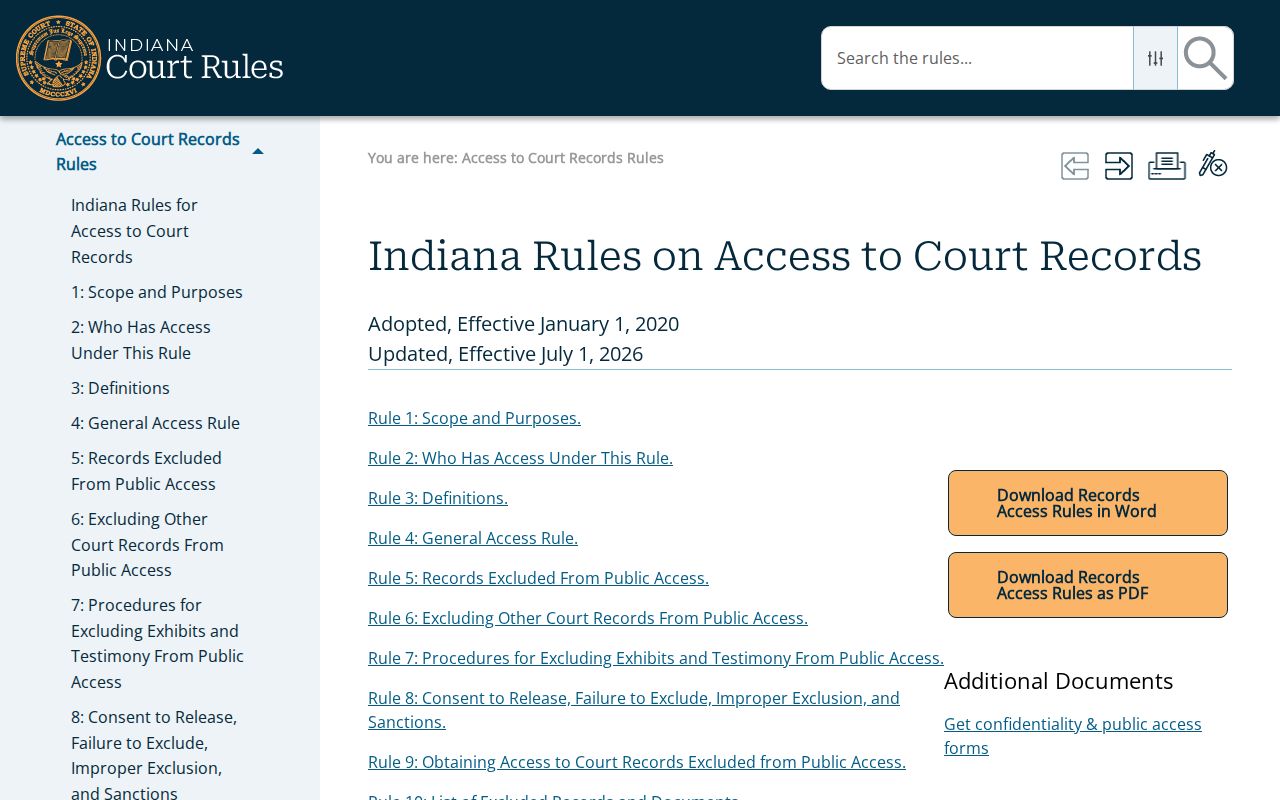
When an item is missing, ask whether the whole case is confidential or just that one record. Never ask staff to disclose protected content. A public indication can remain on the Morgan County docket even while the underlying information stays withheld.
Extraordinary access: Access Rule 9 permits a verified written request in qualifying circumstances, with notice, response, possible hearing, and written order. The record stays confidential while the request is pending.
Morgan Mail and Email Choices
Mailing a records request to the Morgan County Clerk's Office is straightforward. Send the completed form. Include a check or money order, addressed to ATTN Records Dept, 180 S. Main St., Suite 172, Martinsville, IN 46151. Cash should never go through the mail. Email works too. Send the form to records@morgancounty.in.gov. Then call 765-205-1601 with card information if you want to pay that way.
Pickup follows the same first step. Email the form, then phone the clerk to set up a time to come in. Email is the quickest route to an electronically certified copy. It cannot produce a raised seal, though. Need physical authentication for a court order? Mail or pickup is the safer choice.
Whatever delivery method you choose, one rule holds. Include the case number and the exact document title with each copy you request. Ordering several orders? List every event date rather than asking vaguely for the whole file. That detail helps staff tell apart a judgment, a later amended order, and an enforcement filing. Fees can change. Ask for the current total before you send any payment.
Before drafting the request, do one thing. Pull the case number and event title from the Morgan County case search. That one step saves a round trip with the clerk.